During the injection mold manufacturing process, mastering key injection mold technical terms is critical.Whether communicating with mold manufacturers, reviewing mold design drawings, or examining trial mold reports, you’ll inevitably encounter various technical terms.
Many business leaders and procurement personnel looking to commission a mold often face communication barriers because they do not understand these terms—they cannot follow the manufacturer’s technical explanations, fail to interpret key parameters in reports, and may even make incorrect decisions due to misunderstandings of terminology, leading to issues such as deviations in mold production, cost overruns, and delivery delays.Learning basic injection mold technical terms helps you avoid these costly misunderstandings at early stages.
In reality, you don’t need to be an expert in every technical term when commissioning an injection mold, but you must understand the core terminology. This not only prevents communication breakdowns but also allows you to better control mold-making quality and avoid pitfalls.Mastering these injection mold technical terms lays a solid foundation for your mold project.
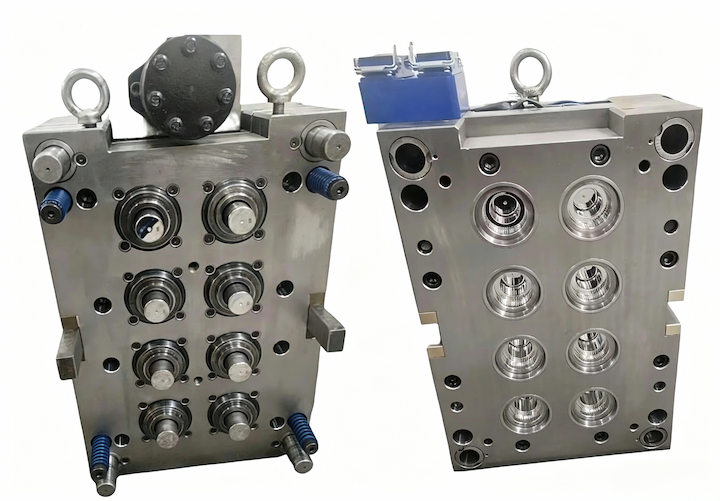
Key Injection Mold Technical Terms You Should Know
1. Moldability.
When reviewing drawings with manufacturers, being familiar with these injection mold technical terms lets you quickly catch potential moldability risks.Simply put, moldability refers to the ability of a product design to be successfully formed using the mold; it is a critical prerequisite that must be confirmed before mold commissioning begins.
Many companies approach manufacturers with finished product drawings only to be told, “The moldability is poor; the design needs to be revised.” This is because the product design contains issues such as uneven wall thickness or excessive undercuts, making it impossible to demold or mold the part successfully.
For companies, moldability directly determines whether a product design can be realized, as well as the cost and difficulty of mold development.
Designs with good moldability result in simpler mold structures, lower mold-making costs, and higher trial mold success rates; conversely, poor moldability not only increases the difficulty of mold design but may also lead to repeated trial mold failures, incurring additional costs.
In day-to-day communication, if a manufacturer mentions “insufficient moldability,” it means the product drawings need to be optimized—for example, by adjusting wall thickness, reducing undercuts, or adding fillets.
2. Shrinkage Rate.
Shrinkage rate is an inherent property of plastic materials. It refers to the percentage by which the product’s dimensions shrink relative to the mold cavity dimensions after the molten plastic cools and solidifies.
Although this term may seem technical, it directly affects the precision of mold design—mold designers must enlarge the mold cavity dimensions based on the material’s shrinkage rate to ensure that the dimensions of the molded product meet design requirements.
For example, if a consumer product is designed to be 100 mm in size and the PP material used has a shrinkage rate of 2%, the mold cavity must be designed to be 102 mm; otherwise, the molded product will shrink and fail to meet dimensional specifications.
If one does not understand shrinkage rate and blindly requires the manufacturer to design the mold according to the product drawing dimensions, it will inevitably lead to dimensional deviations in the product, rendering it unusable.
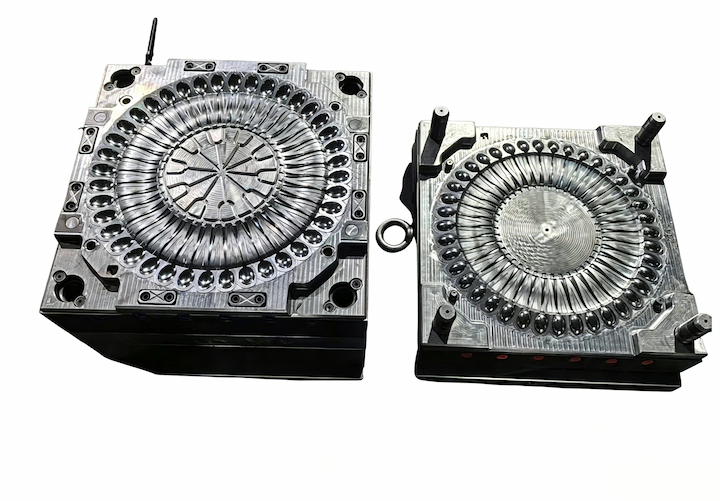
3. Tolerances.
Tolerance refers to the permissible range of dimensional errors for a product or mold; it is a core indicator for measuring mold precision and product quality, commonly expressed as “±value.”
Before mold production begins, the company must clearly define the product’s tolerance requirements. The mold manufacturer will then determine the mold’s machining precision based on these requirements. The stricter the tolerance requirements, the higher the difficulty and cost of mold machining.
Without a proper understanding of tolerances, companies may either blindly pursue excessively high precision, thereby increasing mold-making costs, or overlook tolerance requirements, resulting in excessive dimensional deviations in the molded products that fail to meet usage requirements.
4. Mold Life
Mold life refers to the number of times a mold can produce qualified products normally and is commonly expressed in “mold cycles.”
Mold life primarily depends on mold materials, machining precision, and routine maintenance. The longer the mold life, the lower the mold cost per product.
When accepting the mold, verify the service life promised by the manufacturer to avoid increased production costs later on due to excessive mold wear.
5. Mold Flow Analysis
Mold flow analysis is a critical step in mold design and prior to trial runs. It involves using specialized software to simulate the filling, cooling, and shrinkage processes of the plastic melt within the mold cavity, thereby identifying design flaws in advance and optimizing the design.
Many buyers overlook the value of these injection mold technical terms and ignore the importance of mold flow analysis.
Mold flow analysis effectively reduces the risk of trial mold failures, lowers mold repair costs, and shortens the mold development cycle. If the manufacturer states that “mold flow analysis has been performed,” it indicates that the mold design has been validated through simulation and can effectively prevent common molding defects.
6. Cavities and Cores.
Cavities and cores are the core components of a mold, together forming the molding space for the product. Simply put, “the cavity forms the outer surface of the product, while the core forms the inner surface.”
For example, in a plastic cup, the part of the mold that forms the outer wall of the cup is the cavity, while the part that forms the inner wall and bottom of the cup is the core.
The machining precision of the cavity and core directly determines the product’s surface finish and dimensional accuracy. If the cavity surface has scratches, the outer wall of the molded product will have defects; if the core dimensions are out of tolerance, the inner wall dimensions of the product will fail to meet specifications.
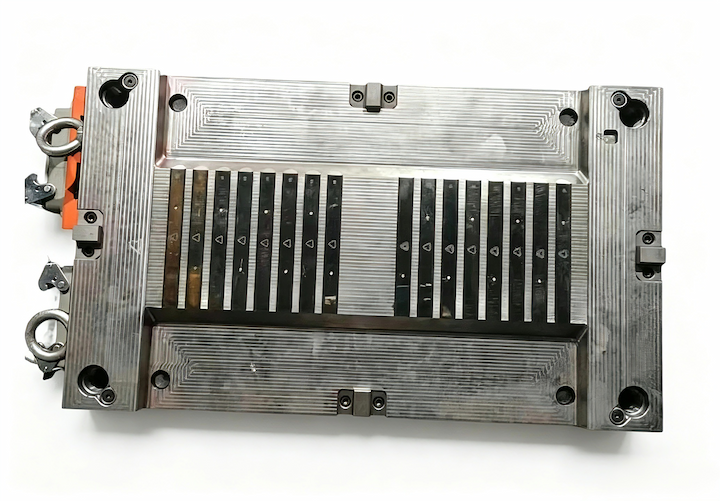
7. Trial Molding.
Mold trial involves mounting the designed and machined mold onto an injection molding machine, injecting molten plastic, molding a sample, and verifying whether the mold design and machining meet requirements. It is an indispensable inspection step in the mold development process.
The primary purpose of trial molding is to identify issues and modify the mold; this process typically requires 1–3 trials until a qualified sample is produced.
After trial molding, the manufacturer will issue a trial molding report, which includes the trial process, sample condition, identified issues, and proposed modifications. Understanding the meaning of “trial molding” enables better coordination with the manufacturer to confirm the mold’s compliance.
8. Mold modification.
Mold modification is the process of modifying and optimizing the mold after trial molding based on issues identified during the trial. It is a necessary step to ensure the mold meets specifications. Common issues requiring modification include product shrinkage, short shots, product deformation, and difficulty in demolding.
The precision and efficiency of mold modification directly impact the mold production cycle and costs. Without a clear understanding of “mold modification,” you may misinterpret the manufacturer’s progress or even reject necessary modification steps, resulting in the mold being unable to enter mass production.
9. Surface Treatment.
Surface treatment is the process of processing the mold cavity surface to give the molded product a specific appearance. Common surface treatment methods include polishing, sandblasting, and texturing.
The method of surface treatment must be determined based on the product’s appearance requirements. Understanding this term allows you to communicate your product’s appearance needs to the manufacturer more precisely.
10. Mold Maintenance.
Mold maintenance refers to the cleaning, lubrication, inspection, and repair of molds during mass production. The purpose is to extend the mold’s service life, ensure its proper operation, and prevent production interruptions caused by mold failures.
Common mold maintenance tasks include: regularly cleaning residual plastic from the cavity and core surfaces; regularly lubricating the ejection and guide systems; and promptly replacing worn components such as ejector pins and O-rings.
Understanding the importance of “mold maintenance” enables better mold management during mass production and reduces losses caused by mold failures.
For those responsible for liaising with mold manufacturers, mastering these core injection mold technical terms will help you communicate more smoothly with them, clearly articulate your requirements, accurately assess mold quality, avoid detours and unnecessary expenses, and make the mold-making process more efficient and hassle-free.
You can also read our step‑by‑step guide about injection mold development to know the full mold‑making workflow