Injection Molding Plastic Material Selection for Mold Design
Injection molding plastic material selection for mold design is critical in injection molding production. The properties of the plastic raw material directly determine the molding results, mold design, and service life.
Many issues—such as failed mold openings, frequent failures during mass production, and low product yield—stem from a failure to match the mold process to the specific plastic material.
Below is a practical guide to injection molding plastic material selection for mold design, covering seven common resins and corresponding mold design solutions.
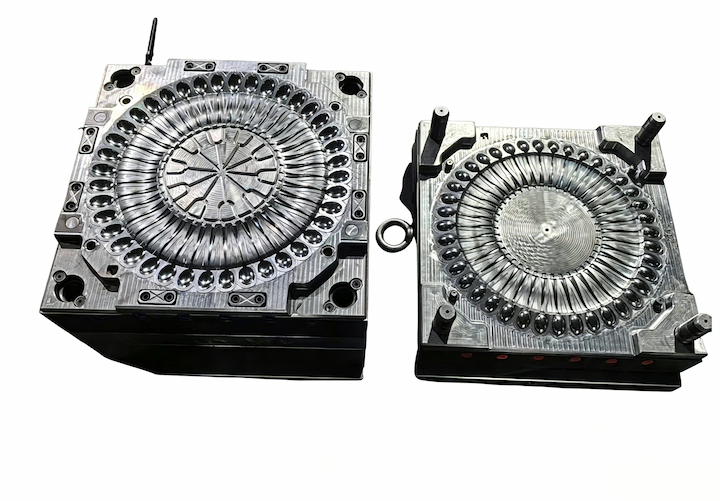
Common Plastic Resins for Injection Molding Plastic Material Selection for Mold Design
Properties of Commonly Used Plastics in Injection Molding and Suitable Products
- PP (Polypropylene)
Properties: Lightweight, good toughness, low‑temperature resistance, high chemical stability, excellent flow properties, and relatively high molding shrinkage; moderate heat resistance, relatively low rigidity, prone to surface scratches, and virtually non‑corrosive.
Suitable Products: Disposable meal containers, plastic storage bins, transport crates, bottle caps, plumbing fittings, automotive interior parts, casings for daily necessities, food packaging containers, etc. It is the most widely used material for daily necessities and packaging items.
- ABS (Acrylonitrile‑Butadiene‑Styrene Copolymer)
Characteristics: Well‑balanced overall performance; excellent rigidity, hardness, and impact resistance; high surface gloss; easy to paint, electroplate, and bond; moderate flowability; low shrinkage; stable molding dimensions; standard grades exhibit extremely low corrosiveness.
Suitable Products: Home appliance housings, digital product accessories, toys, bathroom fixtures, small automotive exterior parts, computer cases, and decorative components. It is the material of choice for aesthetic parts.
- PVC (Polyvinyl Chloride)
Properties: Low cost, good flame retardancy, wide range of hardness (soft and rigid PVC); decomposes easily at high temperatures to produce corrosive gases, which strongly corrode mold cavities; flowability is acceptable, but rigid PVC is relatively difficult to mold.
Suitable Products: Plastic pipes, pipe fittings, door and window profiles, wire insulation, soft sealing strips, toy accessories, and waterproof plastic parts.
- PA (Nylon, commonly PA6/PA66)
Properties: High mechanical strength, wear resistance, high‑temperature resistance, and exceptional toughness; high moisture absorption and high molding shrinkage. Glass‑fiber‑reinforced PA (PA+GF) has high hardness and extreme abrasiveness, which can rapidly wear down mold surfaces.
Suitable Products: Gears, bearings, latches, fasteners, structural automotive parts, wear‑resistant mechanical components, and power tool parts.
- PC (Polycarbonate)
Properties: High transparency, impact resistance, high‑temperature resistance, and exceptional toughness; poor flowability, high melt viscosity, requires higher temperatures and pressure for molding, slow cooling, high internal stress, and prone to cracking.
Suitable Products: Transparent lampshades, lenses, drinking cups, safety guards, high‑strength transparent housings, automotive lamp housings.
- POM (Polyoxymethylene)
Properties: Smooth surface, wear‑resistant, high rigidity, high dimensional accuracy; known as “plastic steel.” Good flowability, high shrinkage rate; releases slightly acidic gases at high temperatures, exhibiting some corrosiveness; prone to flash during molding.
Suitable Products: Precision gears, slide rails, bearings, precision small structural components, hardware and plastic accessories, office equipment parts.
- PE (Polyethylene, HDPE/LDPE)
Properties: Excellent toughness, abrasion resistance, acid and alkali resistance, soft texture, excellent flowability, high shrinkage rate, prone to deformation after molding, average surface gloss, non‑corrosive.
Suitable Products: Plastic buckets, plastic bags, hoses, bottle caps, agricultural plastic parts, and packaging bottles for daily chemicals.
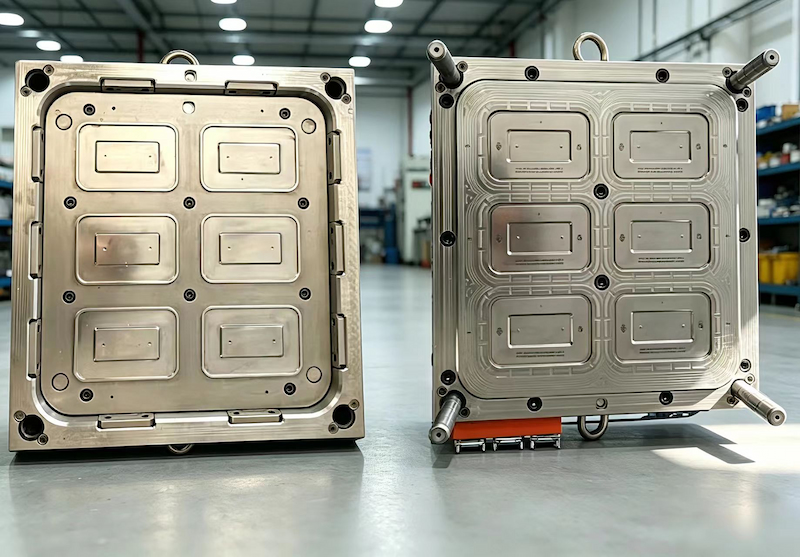
Mold Design Guidance After Injection Molding Plastic Material Selection for Mold Design
Based on the four key indicators—corrosiveness, abrasiveness, flowability, and molding temperature—this section explains the process step by step across four dimensions: mold steel selection, runner system design, mold structure, and auxiliary design.
- PP/PE (General‑Purpose Soft Plastics)
Mold Steel Selection:
Since the material is non‑corrosive and does not cause severe wear, economical steel grades should be prioritized;
For small‑batch, short‑term mass production, select P20, 45# quenched and tempered steel, or S50C for the lowest cost;
For medium‑ to large‑volume production and products requiring high surface gloss, select 718H or 738H, which offer good polishability and can achieve a high‑gloss finish.
Runner System Selection:
Both materials have excellent flow properties; standard cold runners fully meet production requirements, and the installation of hot runners is not recommended (unless the product is very tall);
For multi‑cavity molds and small products, side gates or point gates are sufficient, and gate sizes can be kept relatively small;
For large, thin‑walled parts, appropriately increase the size of the runners and gates to prevent short shots.
- ABS (General‑Purpose Material for Cosmetic Parts)
Mold Steel Selection:
Corrosion‑resistant and low‑wear, balancing aesthetic appearance with mass‑production lifespan;
For standard cosmetic parts and routine mass production, use 718H or P20;
For high‑gloss surfaces, electroplated/painted parts, and long‑term mass production, use NAK80 or S136; these can be polished to a mirror finish and are resistant to pitting.
Runner System Selection:
Moderate flowability; cold runners are the primary choice. For multi‑cavity precision appearance parts and high‑end products, hot runners may be selected to reduce gate marks.
For appearance parts, prioritize submersed gates and fan gates to conceal gate marks.
- PVC (Corrosive Plastic)
Mold Steel Selection:
Corrosion resistance is required; ordinary steels are highly susceptible to rust and corrosion.
Corrosion‑resistant stainless steel must be used, such as 4Cr13, S136, STAVAX, or 2316; ordinary carbon steel, P20, or 718 must not be used.
All mold components—cavities, guide pins, ejector pins, and inserts—must be made of corrosion‑resistant steel; even small components must not be mixed with ordinary steel.
Runner System Selection:
Cold runners are preferred, as high‑temperature decomposition of PVC can cause corrosion:
Hot runner nozzles and heating elements—hot runner systems have extremely high maintenance costs and are not recommended unless absolutely necessary.
Polish the runner system to reduce material retention and prevent prolonged high‑temperature decomposition of the material.
- PA / Glass‑Fiber‑Reinforced PA (Wear‑Resistant Materials)
Mold Steel Selection:
Pure nylon exhibits low wear resistance, while glass‑fiber‑reinforced PA is highly wear‑resistant; prioritize high‑hardness, wear‑resistant steels;
For pure PA products, 718H or P20 is sufficient;
PA + glass fiber (most common) requires S136 or Cr12MoV, quenched and tempered to HRC 50 or higher;
Cavities, cores, inserts, and ejector pins should all be made of hard steel to prevent scratching and wear during long‑term mass production.
Runner System Selection:
For products with good flowability, use cold runners for standard products; for molds with a high number of cavities or precision small parts, use a simple hot runner system;
Enlarge the gate appropriately, as the flowability of glass‑fiber‑reinforced materials is slightly reduced, to prevent underfilling.
- PC (High‑Viscosity Transparent Material)
Mold Steel Selection:
Corrosion‑resistant and low‑wear; key requirements include high polish and high purity to suit transparent products;
For transparent parts, S136, STAVAX, and NAK80 are the preferred choices, with mirror‑finish polishing free of material streaks and pitting;
The use of ordinary steels with high impurity content is strictly prohibited, as they are prone to light transmission defects.
Runner System Selection:
Due to high melt viscosity and poor flowability, hot runner systems are recommended, especially for large, thin‑walled, and highly transparent products;
If cold runners are used, the main runner, distributor, and gate must be enlarged to reduce flow resistance; the entire runner system must undergo mirror‑finish polishing.
- POM (Polyoxymethylene)
Mold Steel Selection:
Suitable for mild acidic corrosion and moderate wear, balancing rust resistance and wear resistance;
For mass‑production molds, select 2316, S136, or 718H with hardening treatment; for small precision parts, use high‑hardness, corrosion‑resistant steel.
Runner System Selection:
Excellent flowability; cold runners are fully sufficient, and gates can be miniaturized; precision small parts often use point gates;
Summary
There is no one‑size‑fits‑all solution for injection molding plastic material selection for mold design; material selection determines the approach, and requirements dictate the configuration:
General consumer goods (PP/PE/ABS): Emphasize cost and gloss; standard mold steel with cold runners is sufficient;
Corrosive materials (PVC): Prioritize corrosion‑resistant stainless steel; avoid complex hot runner systems; enhance venting and cooling;
Glass‑fiber‑reinforced nylon: Use high‑hardness, wear‑resistant steel to withstand long‑term wear;
Transparent parts (PC): Use highly polished mirror‑finish steel and prioritize hot runner systems to address flow issues;
Precision structural parts (POM): Improve mold fitting accuracy to control shrinkage and flash.
By tailoring mold design to the product’s application, production volume, and aesthetic requirements during injection molding plastic material selection for mold design, you can minimize trial‑run failures from the outset, reduce later mold modification and maintenance costs, and achieve stable mass production.
Reference: For more detailed plastic material property parameters, please check professional polymer material database
If you want to know more knowledge of molding,you can see the Which injection mold steel for daily plastic products offers the best cost-performance ratio.