When designing injection molds, the choice of two‑plate vs three‑plate molds is unavoidable.
Sometimes, to save trouble, a two‑plate mold is chosen, resulting in unsightly gates and high trimming costs, leading to customer returns and rework; other times, a three‑plate mold is chosen blindly, doubling the mold cost and lengthening the molding cycle, making it completely uneconomical for high‑volume production.
Many issues—such as molds exceeding budgets or production runs not going smoothly—stem from incorrect structural design choices between two‑plate vs three‑plate molds.
In reality, within the mold industry, there is no “more advanced” option between two‑plate and three‑plate molds; it all comes down to whether the design is suitable for the product and whether it can balance cost and quality.
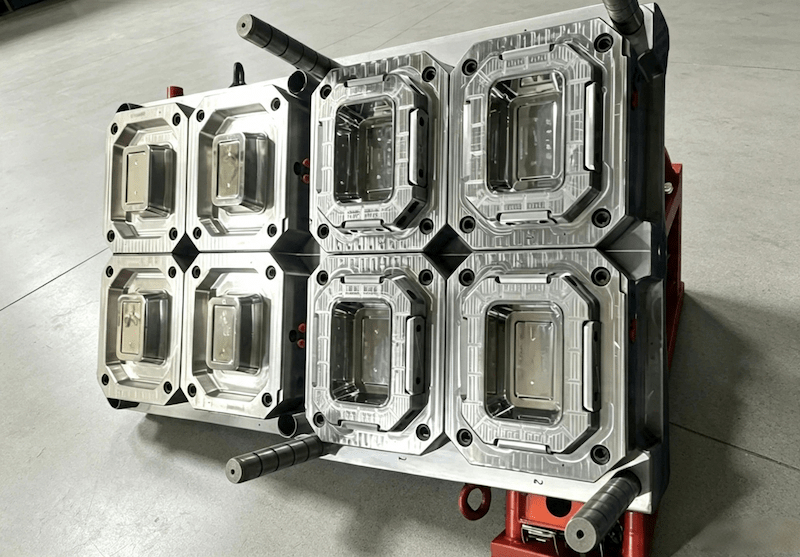
Two‑Plate vs Three‑Plate Molds: What Are The Key Differences?
Many people cannot distinguish between the two because they fundamentally do not understand mold parting lines and gate discharge methods. Let’s differentiate two‑plate vs three‑plate molds using the simplest logic.
Two‑Plate Molds
As the name implies, a two‑plate mold consists of two plates: a fixed mold and a moving mold, with only one parting line throughout the entire process.
The operating principle is also simple: when the mold opens and closes once, the product and the gate material remain attached and are ejected simultaneously. After molding, manual or mechanical trimming of the gate and sprue is required.
Key features: The gate and product remain attached; the structure is extremely simple.
Three‑plate mold
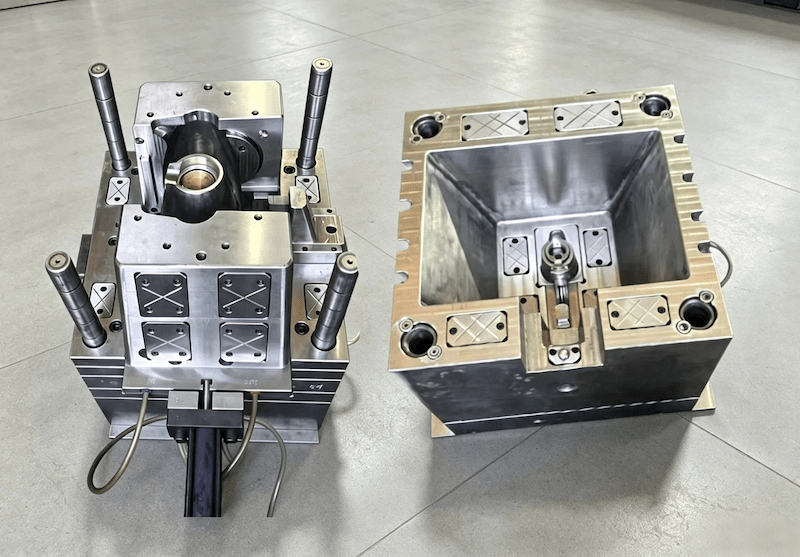
A three‑plate mold builds upon the two‑plate mold by adding a runner plate (sprue plate). The assembly consists of a fixed mold, a runner plate, and a moving mold, with two parting lines.
Its core advantage is automatic separation: when the mold opens and closes, the first parting line first pulls the gate material away, and the second parting line then ejects the product. Ultimately, the product and sprue material separate automatically, eliminating the need for subsequent trimming.
Key Features: Automatic separation of product and sprue; more complex structure
Two‑Plate vs Three‑Plate Molds: Advantages, Disadvantages, and Applications
Two‑Plate Molds
Two‑plate molds are the “entry‑level, cost‑effective option” in the mold industry and are currently the most commonly used mold type for mass production. Their main advantages include the following:
Lower cost.
With fewer mold plates, fewer components, a simpler structure, and fewer machining steps, the tooling cost for the same product is 20%–40% lower than that of a three‑plate mold, making it extremely budget‑friendly for projects with limited budgets.
High production efficiency.
The mold has a short opening and closing stroke and simple movements, resulting in shorter molding cycles. It offers clear advantages for high‑speed mass production and is suitable for high‑volume production runs.
Extremely low failure rate.
With no complex parting lines or ejection mechanisms, and fewer sliders, angled ejectors, and spring components, these molds are less prone to jamming, broken pins, or unplanned downtime, ensuring maximum mold stability.
Simple maintenance.
Daily maintenance, mold repairs, and polishing are all more convenient, resulting in extremely low long‑term maintenance costs. Even novice machine setup technicians can quickly get up to speed.
Disadvantages of two‑plate molds:
Limited gate placement.
Gates can only be located at the product edges or parting lines; they cannot be placed on the inner surfaces, top surfaces, or hidden areas of the product.
Flash marks on the product.
The product and gate material are removed as a single piece, requiring manual trimming and polishing, which can easily leave defects and affect the aesthetic integrity of the product.
Inability to meet high‑end aesthetic requirements.
It is difficult to achieve the standards required for precision aesthetic parts with mirror finishes, matte finishes, or seamless surfaces using two‑plate molds.
Two‑plate molds are primarily suitable for products with non‑extreme aesthetic requirements, where gate marks can be exposed, and that are intended for high‑volume mass production, such as:
Daily necessities: plastic basins, buckets, storage bins, clothes hangers, disposable food containers
Structural components: Internal plastic brackets for home appliances, housing liners, standard plastic accessories
Industrial parts: Pipe fittings, plastic gaskets, standard non‑OEM injection‑molded parts
As well as all conventional injection‑molded products with limited budgets that prioritize low cost and high production capacity.
Three‑Plate Molds
Three‑plate molds are the industry’s “advanced, precision‑grade” option, designed to address surface defects and hidden gate issues. They are the top choice for high‑end plastic products and offer the following advantages:
Flexible and versatile gate placement.
Gates can be placed at any location on the product (top surface, interior, center, or hidden areas), completely avoiding visible surfaces and perfectly resolving the issue of exposed gates.
Automatic sprue separation, saving labor.
The product and sprue are automatically separated, eliminating the need for manual trimming or sanding and reducing subsequent processing steps, making mass production more hassle‑free.
Flawless product appearance.
With no visible gate marks, this method is compatible with high‑end surface finishes such as mirror‑finish, sunburst patterns, and frosted finishes, significantly enhancing both the product’s aesthetics and quality.
Suitable for products with complex structures.
For plastic parts with irregular shapes, deep cavities, or enclosed structures, it optimizes gate balance, reducing defects such as shrinkage, warpage, and short shots.
Disadvantages of three‑plate molds:
High mold development costs.
An additional runner plate increases machining processes, component costs, and labor costs, resulting in mold costs that are significantly higher than those of two‑plate molds.
Longer molding cycles.
The mold requires more opening and closing movements and has a longer stroke, increasing the time per cycle and impacting production capacity for high‑volume mass production.
Higher failure rate.
Due to the complex structure and the greater number of components—such as springs, stops, and guide pins—long‑term mass production is prone to issues like plate jamming, broken springs, and incomplete parting.
Difficult to maintain.
Mold repair, maintenance, and machine adjustment require higher technical skills from technicians, resulting in higher long‑term maintenance and time costs.
Three‑plate molds are primarily suitable for products with high aesthetic requirements, where gates must not be exposed, structures are complex, and the products have high added value, such as:
Digital and Home Appliances: Mobile phone casings, remote control housings, mirror‑finish casings for small appliances, decorative parts
Automotive Parts: Automotive interior trim, headlight housings, precision plastic trim strips
Cosmetics and Daily Necessities: Cosmetic bottle caps, skincare product casings, transparent plastic decorative parts
Precision Small Parts: Medical components, micro‑plastic parts, export products requiring flawless appearance
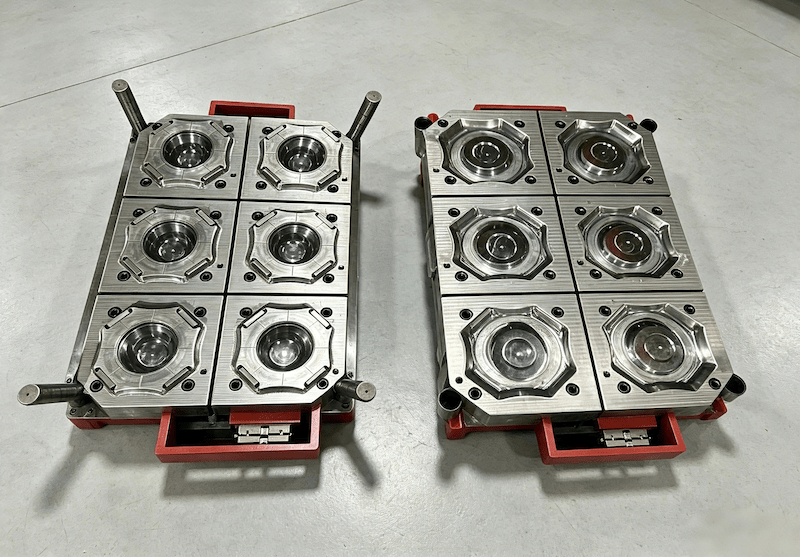
Final Thoughts on Two‑Plate vs Three‑Plate Molds
When comparing two‑plate vs three‑plate molds, there is no “best” mold structure—only the solution that best suits the product.
Understanding the pros and cons of each type and their appropriate applications can help you avoid unnecessary mold development costs while preventing issues such as substandard product quality and production bottlenecks.
If you have specific product drawings and are unsure whether to choose a two‑plate or three‑plate mold, feel free to leave a comment at any time. We’ll help you select the right mold type for free and guide you in avoiding common pitfalls!
You can also read our step‑by‑step guide about injection mold development to know the full mold‑making workflow