I. Introduction to the Injection Molding Process
The injection molding process is a highly efficient and precise plastic processing technology. It involves injecting molten plastic into a mold, where it cools and solidifies to form a product with the desired shape. This process offers the advantages of high production efficiency, excellent product precision, and low cost, and is widely used in fields such as electronics, automotive manufacturing, and medical devices. The key to injection molding lies in mold design and manufacturing; a precise mold is essential for producing high‑quality products. At the same time, material selection is also critical, as different plastic materials possess distinct physical and chemical properties and must be chosen appropriately based on product requirements.
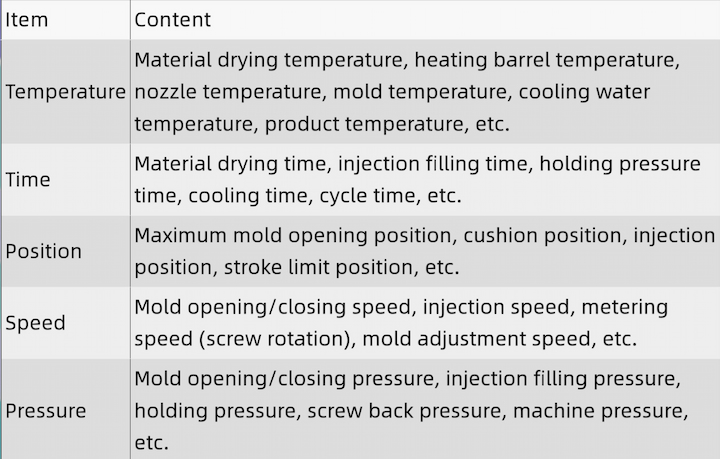
Injection Molding Process: Molding Machine Introduction
Injection molding machines use molds to inject molten plastic, thereby manufacturing various plastic products. Characterized by high precision, high efficiency, and a high degree of automation, these machines are capable of producing plastic products with complex shapes and precise dimensions, and are widely used in industries such as automotive, electronics, and medical. At the same time, injection molding machines offer a high degree of flexibility and adaptability, allowing for mold changes and process adjustments to meet the requirements of different products.
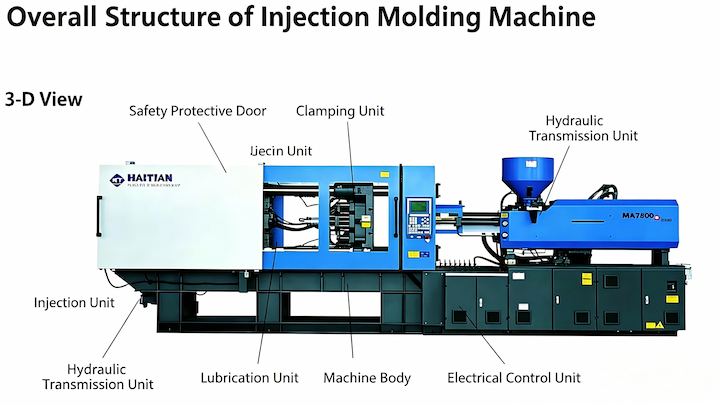
III. Introduction to Molds
Within the injection molding process, molds are the core hardware. In industrial production, molds refer to the various molds and tools used to produce desired products through methods such as injection molding, blow molding, extrusion, die casting, forging, smelting, and stamping.
In industrial production, molds refer to the various molds and tools used to produce desired products through methods such as injection molding, blow molding, extrusion, die casting, forging, smelting, and stamping. In short, a mold is a tool used to shape objects; it consists of various components, and different molds are composed of different parts. Molds primarily achieve the shaping of an object’s form by altering the physical state of the material being molded. Molds are often referred to as the “mother of industry.” In industrial production, molds are divided into two major categories: plastic molds and metal molds. Plastic products are formed using processes such as blow molding, thermoforming, injection molding, overmolding, and two-color molding, while metal products are produced through stamping. Here, we will focus primarily on molds for plastic parts.
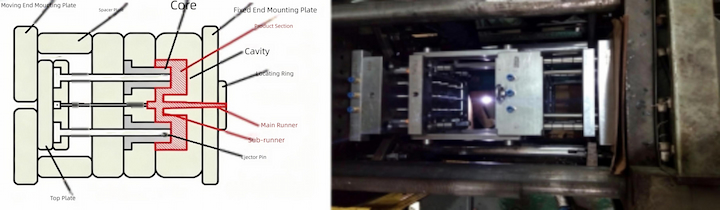
Draft Angle Requirements: Generally, the front mold surface should have a draft angle of 1–3 degrees, and the rear mold surface should have a draft angle of 1–3 degrees (determined based on the product’s height). When specific requirements apply, following the principle of minimizing material waste, a step difference of 0.2–0.3 or greater on the front mold surface is preferred (determined based on the product’s height), and a step difference of 0.2–0.3 on the rear mold surface is preferred. For products with sandblasted or textured surfaces, a step difference of 0.5 or greater is preferred.
IV. Design Considerations for Injection-Molded Parts
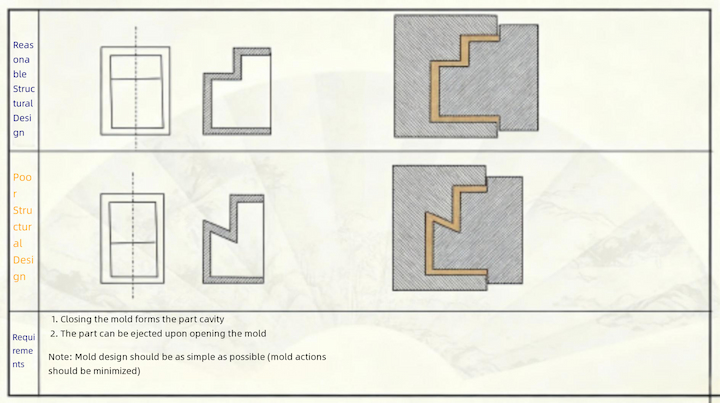
1. Two Basic Requirements for the Design of Molds for Injection-Molded Parts
2.The Importance of Uniform Wall Thickness in Plastic Parts
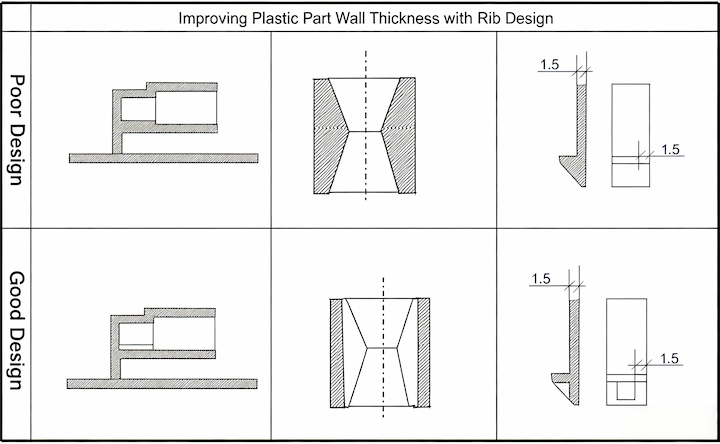
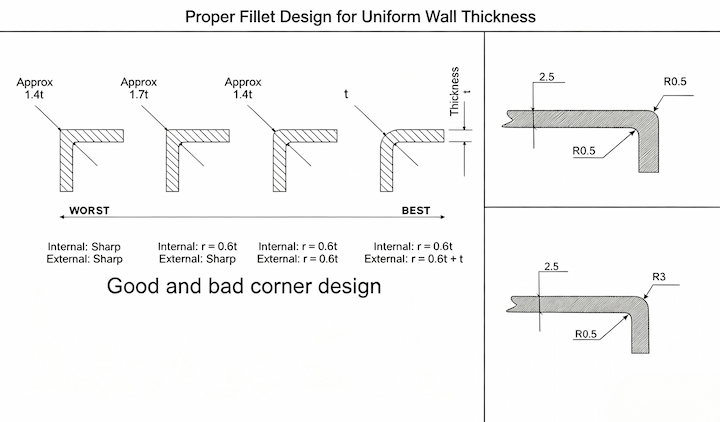
3.When designing injection-molded parts, proper consideration should be given to fillet design.
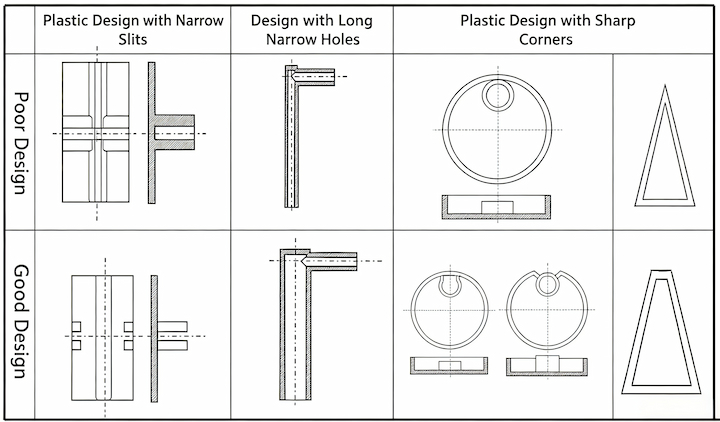
4.Mold strength should be taken into account when designing injection-molded parts.
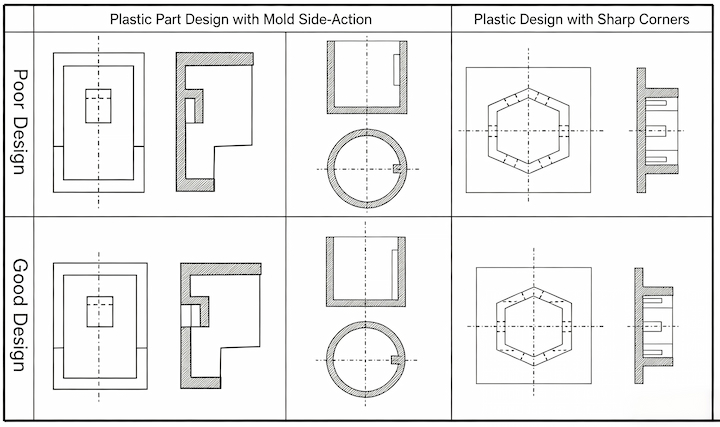
5.When designing injection-molded parts, consideration should be given to simplifying the mold (reducing the number of mold movements).
V. Analysis of Injection Molding Defects
During the injection molding process, common defects include insufficient filling, flash, wavy plastic surfaces, and poor weld lines. Insufficient filling is often caused by low melt flow, improper mold design, or insufficient injection pressure.
Common defects include insufficient filling, flash, wavy plastic surfaces, and poor weld lines. Insufficient filling is often caused by low melt flow, improper mold design, or insufficient injection pressure.
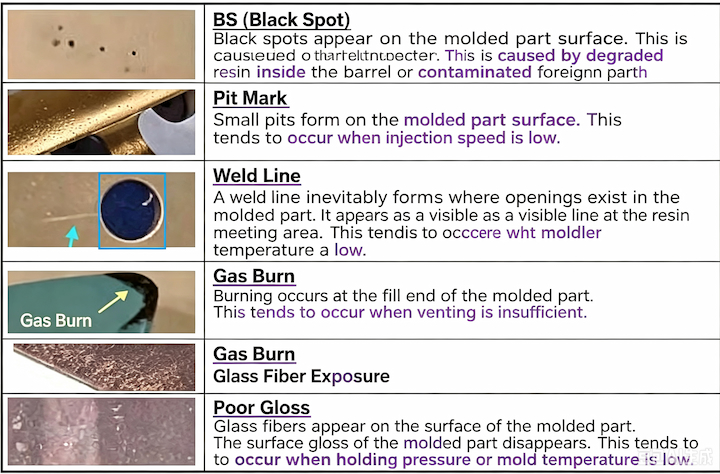
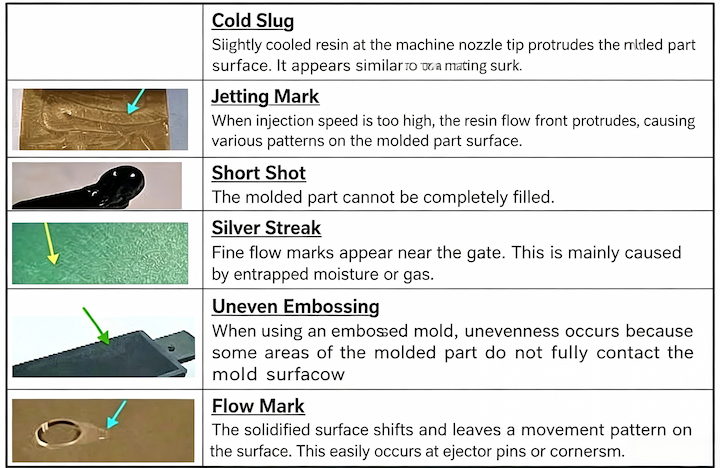
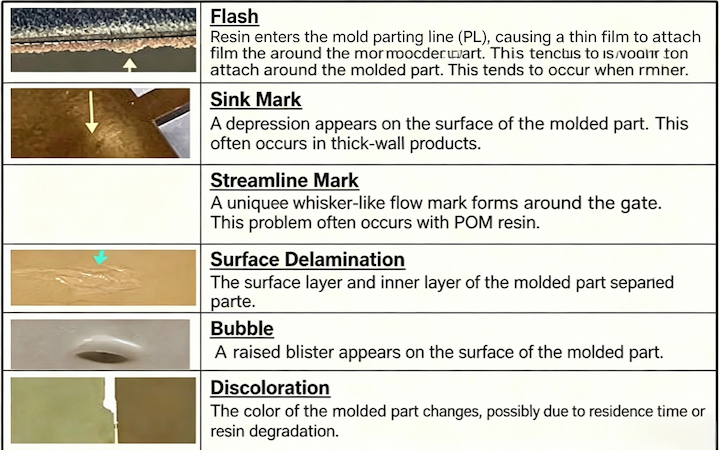
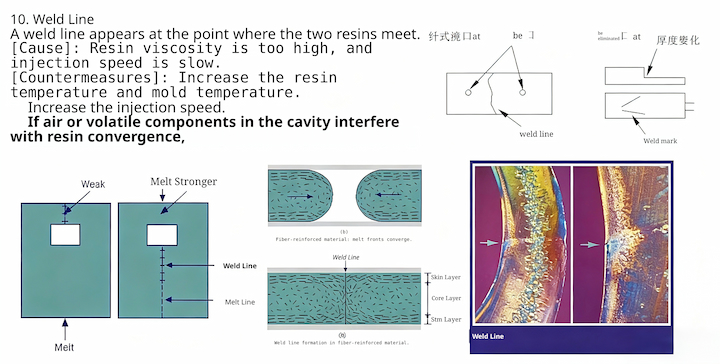
Avoiding these common defects requires joint optimization of product structure design, mold structure and injection process parameters. Good early‑stage product design can greatly reduce mold modification costs and improve final plastic part quality.
In actual mass‑production projects, product design, mold structure and injection parameters interact with each other. Even small details such as fillet and draft angle will greatly affect final product appearance and production stability. For custom plastic parts, early‑stage technical evaluation helps to avoid expensive mold revisions later.
Explore more professional guides in our [injection mold knowledge base].
2 thoughts on “Complete Injection Molding Process | PROVEN 5 Key Stages for Custom Plastic Parts”
Hi, this is a comment.
To get started with moderating, editing, and deleting comments, please visit the Comments screen in the dashboard.
Commenter avatars come from Gravatar.